AI-Powered Drug Discovery
Disease Biology · AI Prediction · Compound Prioritisation · Generative Molecule Design. From disease biology to generative molecule design — a story-driven journey through modern AI drug discovery, with no heavy coding required.
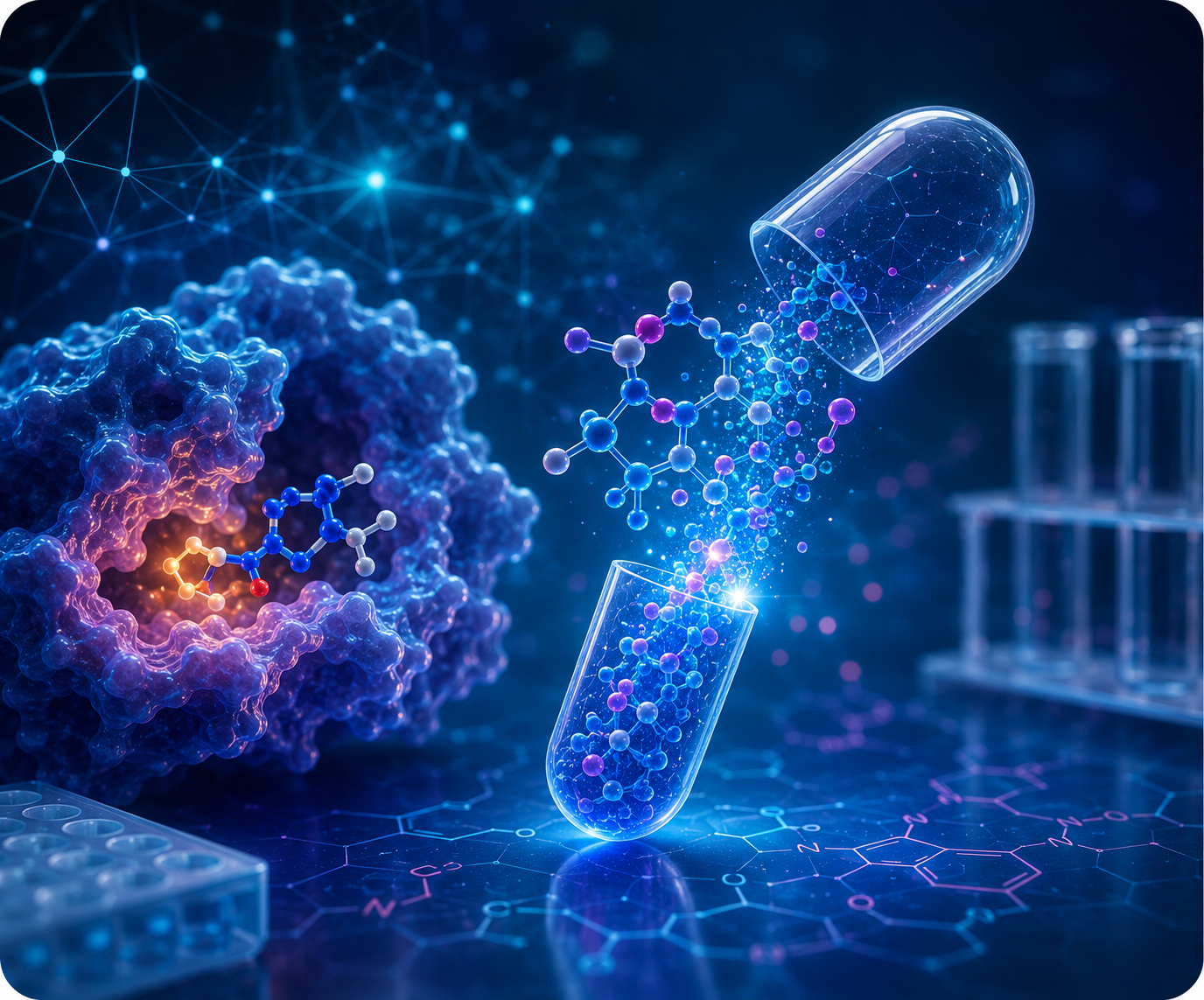
AI-Powered Drug Discovery
By London School of Multiomics & AI
A story-driven journey through modern AI drug discovery.
This programme follows the scientific journey of drug discovery: from understanding a disease problem to identifying a target, exploring biological and chemical data, using AI prediction, prioritising compounds and introducing generative molecule design.
Scientifically strong, visually rich and accessible for biomedical, pharmacy, life science and research learners — without making it too coding-heavy.
From disease biology to generative molecule design.
Six interconnected learning pillars + a final conceptual AI drug discovery proposal — built to take you from disease problem to candidate plan.
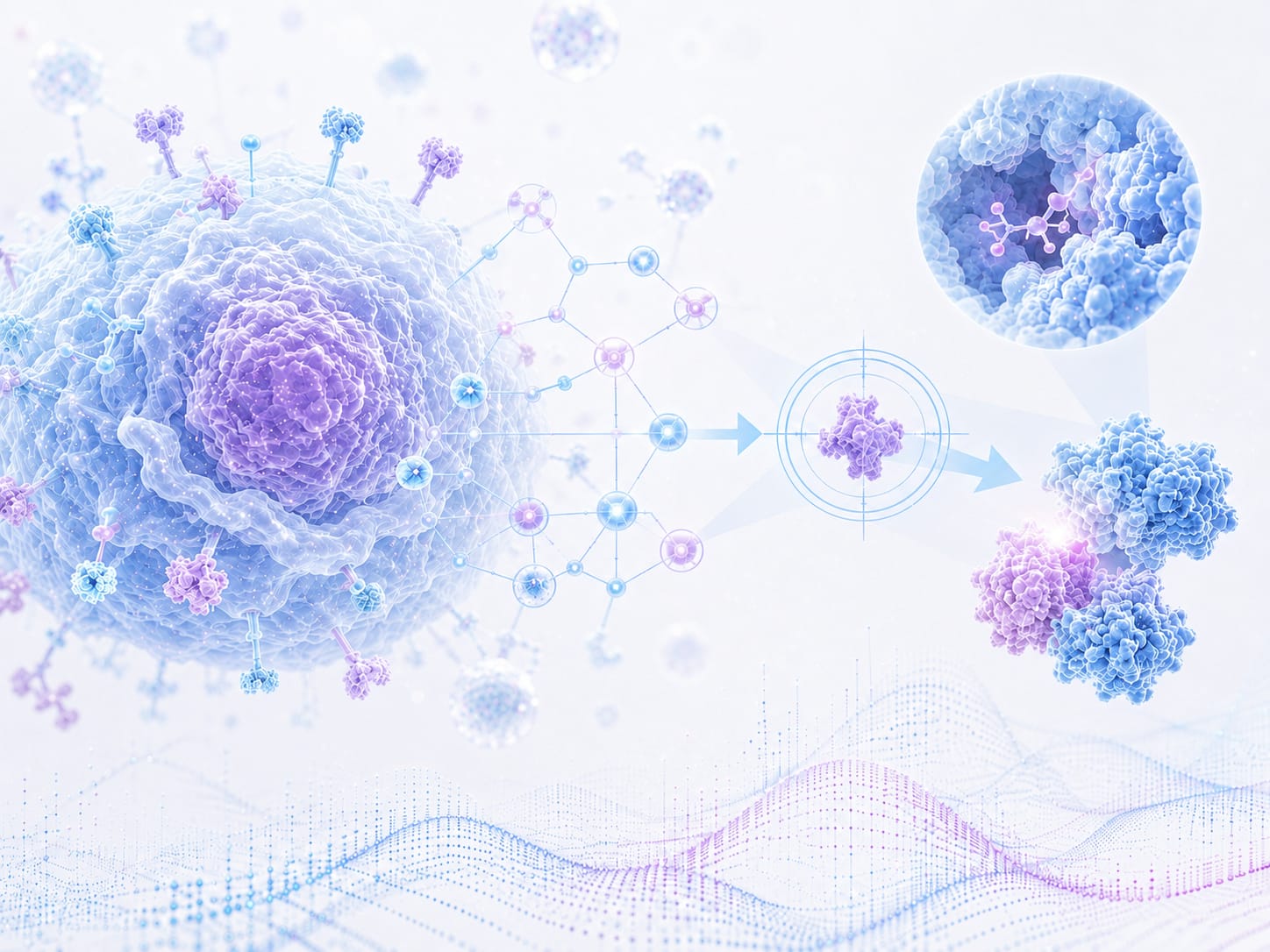
Disease Biology & Targets
Therapeutic hypotheses, target identification and target validation logic.
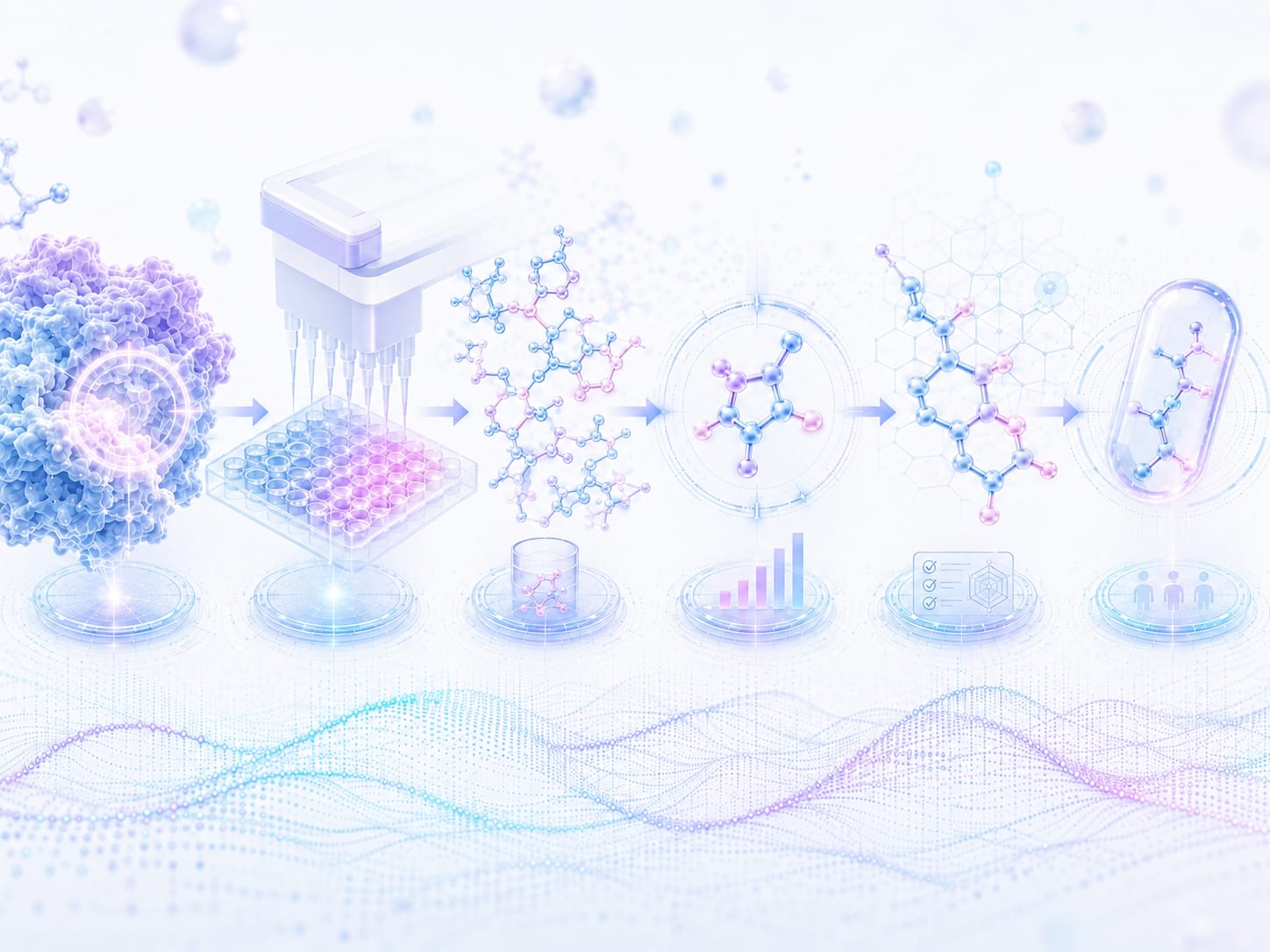
Drug Discovery Pipeline
From target identification through screening, optimisation and candidate evaluation.
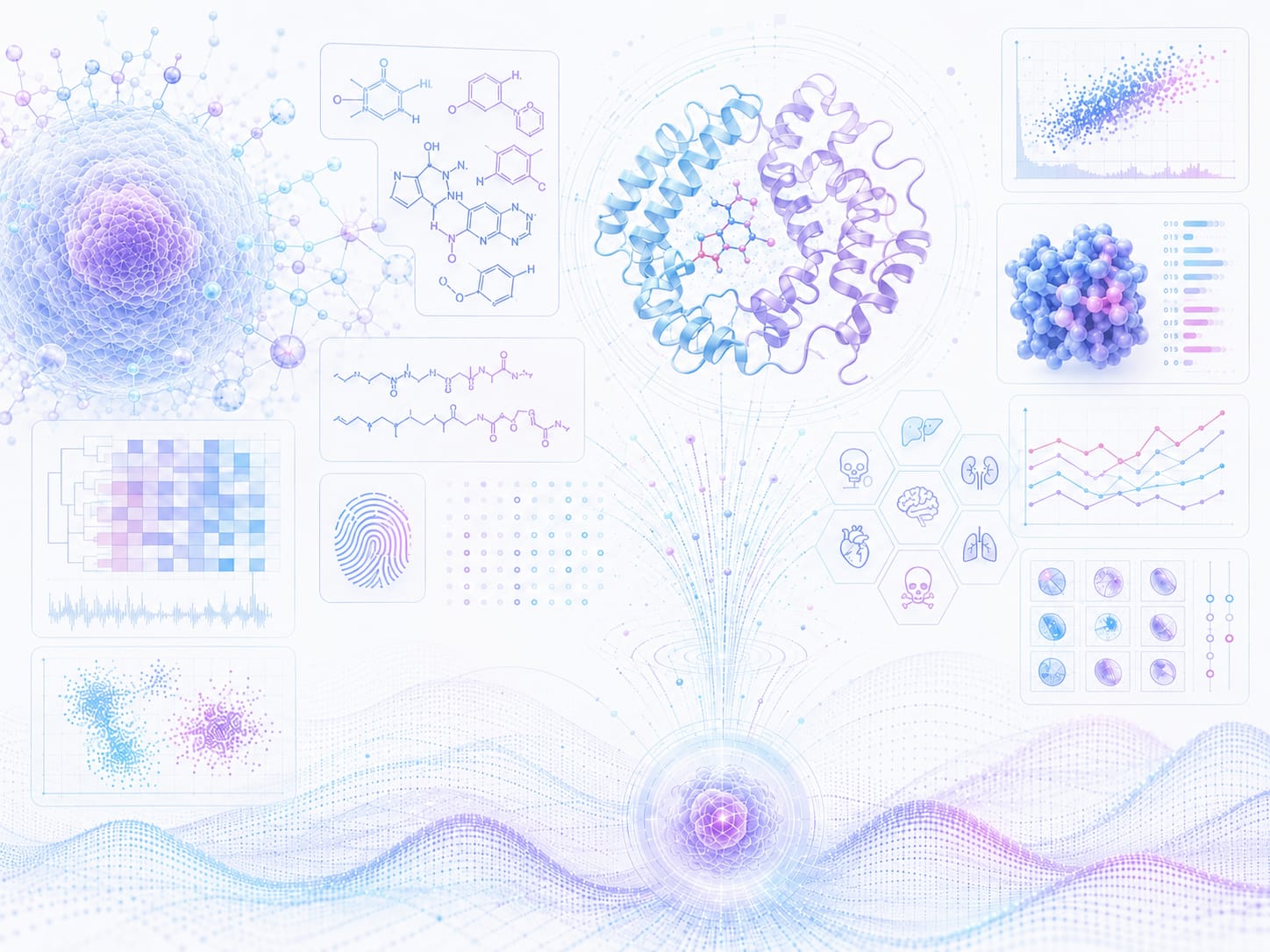
Biological & Chemical Data
SMILES, fingerprints, proteins, omics, ADMET and toxicity data.
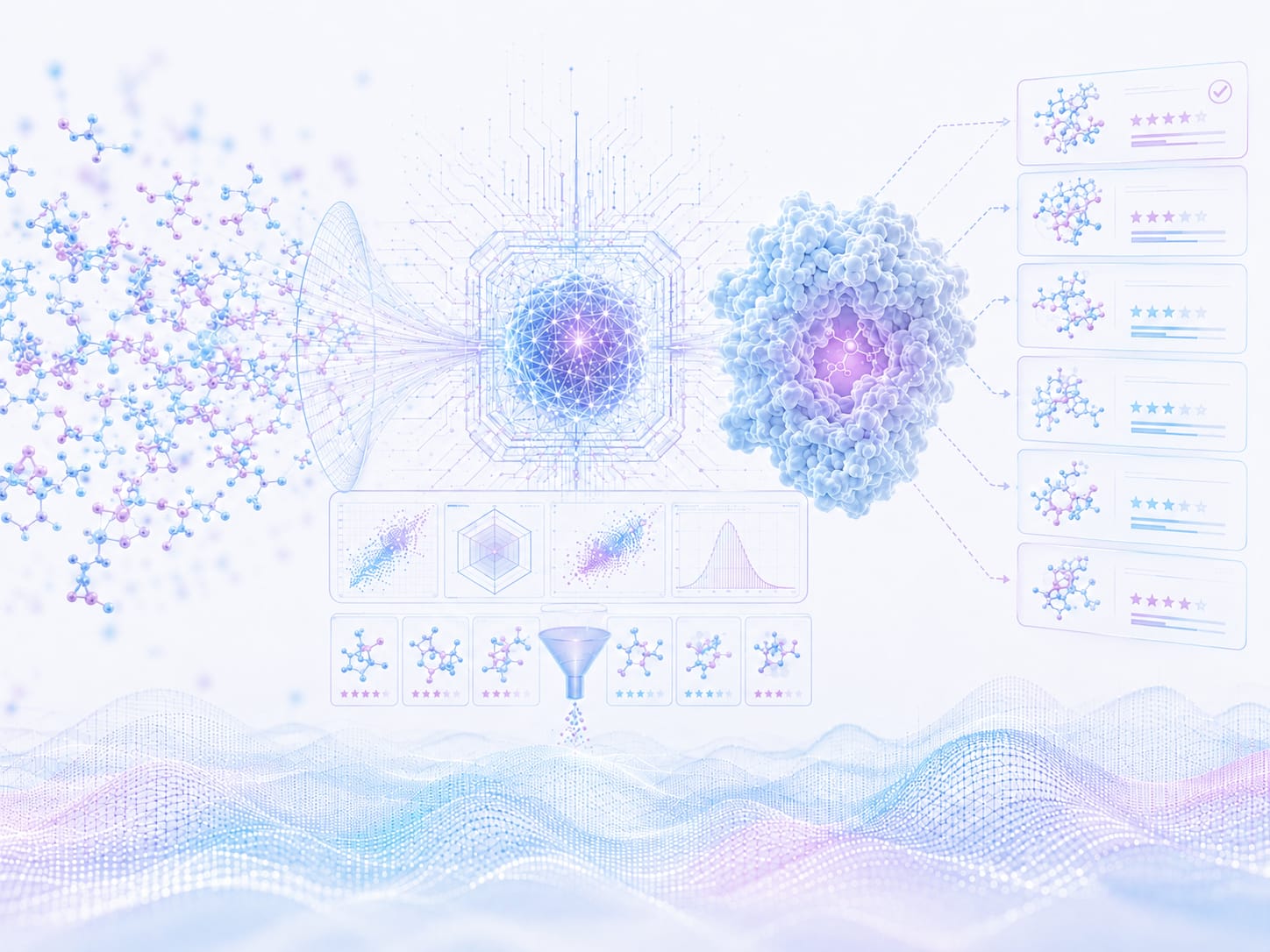
AI Prediction & Screening
ML prediction, virtual screening, drug–target interaction and ADMET modelling.
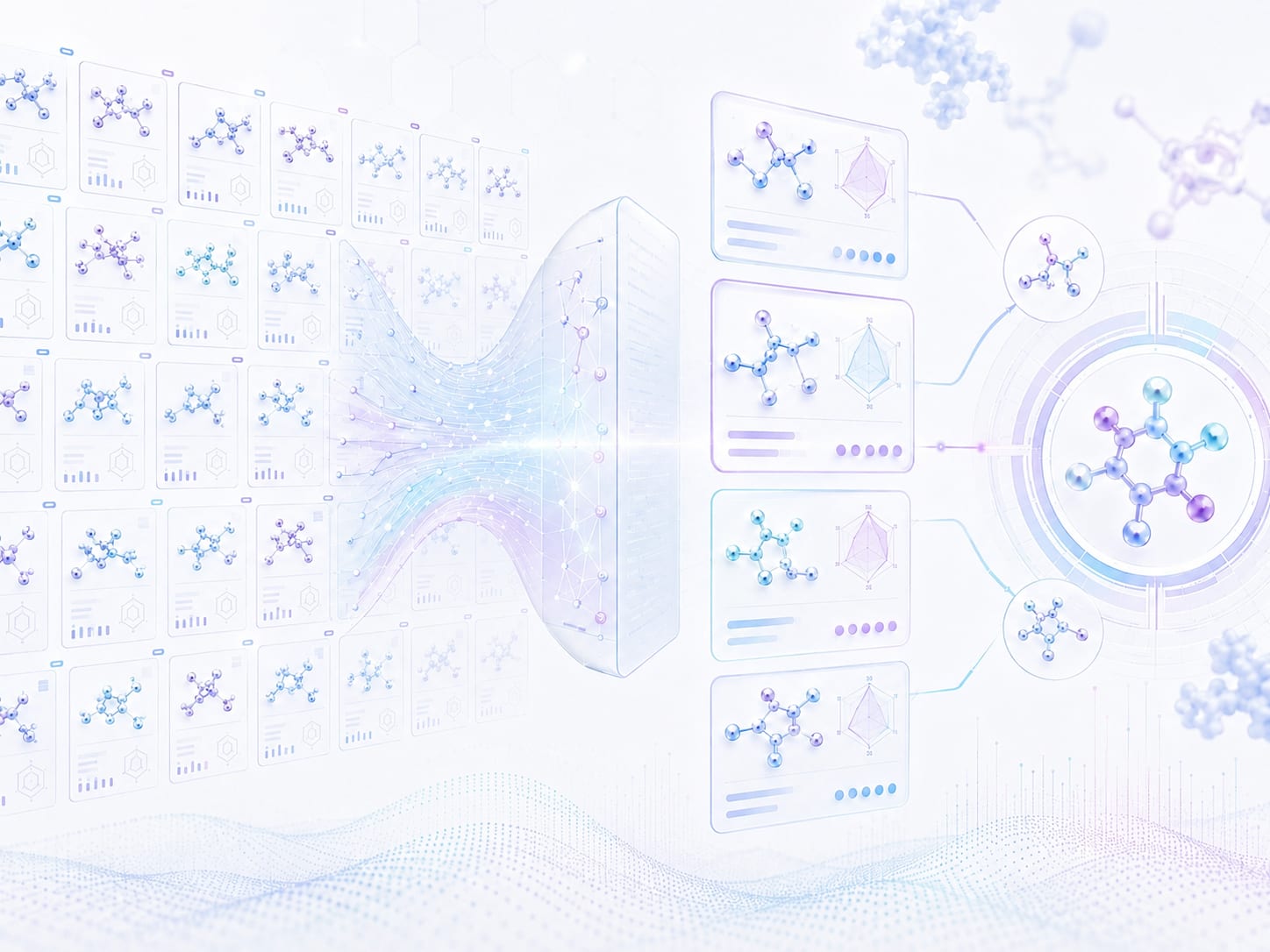
Compound Prioritisation
Ranking compounds, interpreting scores and selecting realistic candidates.
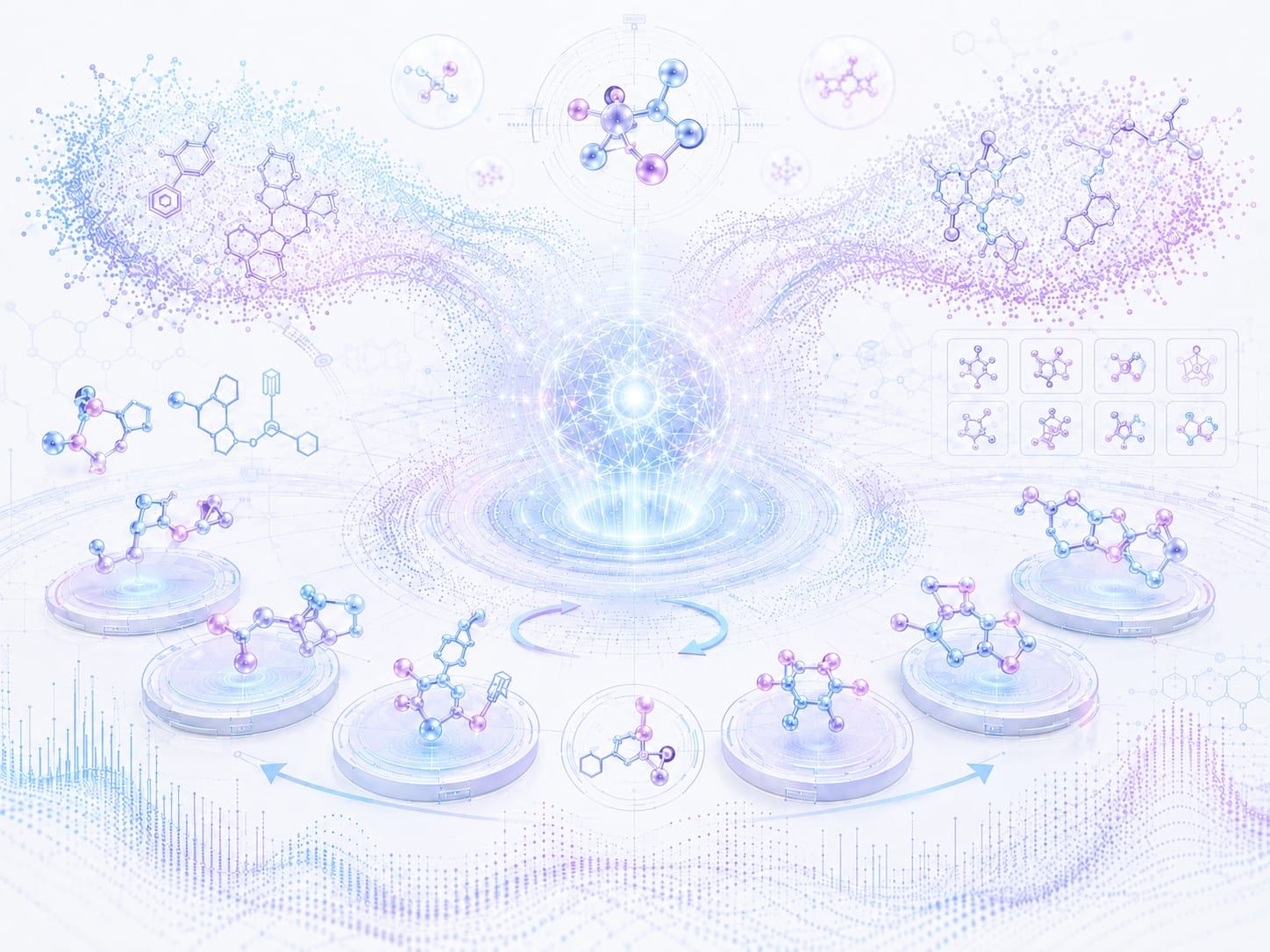
Generative Molecule Design
De novo design, VAEs, GANs, diffusion models and reinforcement-learning optimisation.
Build a Conceptual AI Drug Discovery Proposal
Learners connect the full journey: disease problem, target / pathway, data, AI approach, compound strategy and candidate evaluation plan — into a single conceptual proposal.
- Disease problem
- Target or pathway
- Data needed
- AI prediction / design approach
- Candidate evaluation plan
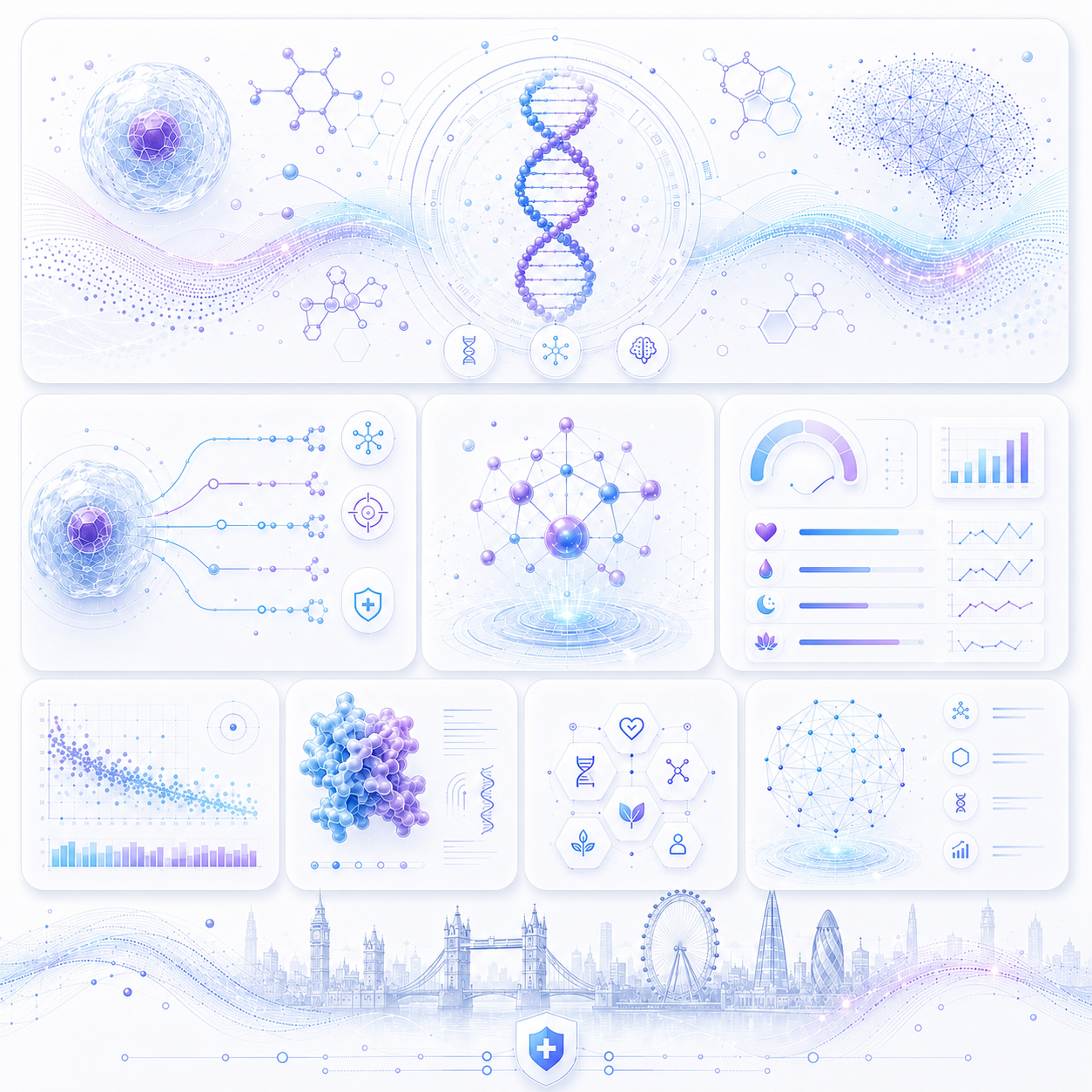
For learners who want to understand AI in drug discovery.
Suitable for those who want scientific understanding, workflow thinking and interpretation without heavy coding — from disease biology to molecule design.
Biomedical Students
Undergraduates and postgraduates exploring how AI is reshaping modern drug discovery.
Pharmacy Students
Build fluency in targets, molecular data and AI-driven candidate selection.
Pharmacists
Connect therapeutic logic with AI prediction, ADMET and modern discovery workflows.
Life Science Graduates
Add target biology, molecular data and AI thinking to a strong life-science foundation.
Bioinformatics Students
Bring scientific framing to ML, virtual screening and generative chemistry workflows.
Researchers
Build a clear AI-driven discovery framework you can apply to your research questions.
Biotech & Pharma Pros
Strengthen scientific judgement on AI screening, prioritisation and candidate evaluation.
AI-Curious Learners
Anyone interested in AI, therapeutic innovation and the future of medicine design.
A story-based pathway from disease to design.
From the scientific problem of drug discovery to data, AI prediction and generative molecule design.
01
The Problem: Why Is Drug Discovery So Hard?The scientific challenge before
AI
Understand the real scientific challenge before AI is introduced.
- Drug discovery pipeline overview
- Disease biology and therapeutic hypotheses
- Target identification and validation
- Why drug candidates fail
- AI hype versus real scientific value
02
The Data: How Does AI See Biology and Molecules?Biology and chemistry as
AI-readable data
Explore how biology and chemistry become AI-readable data.
- Molecular structures as data
- SMILES, fingerprints and molecular features
- Protein targets and binding sites
- Omics data and disease signatures
- ADMET, toxicity, data quality and bias
03
The Model: How Can AI Predict and Prioritise Compounds?Screening, prediction
and candidate selection
Learn how AI supports screening, prediction and candidate selection.
- Machine learning in drug discovery
- Activity and property prediction
- Virtual screening and drug repurposing
- Drug–target interaction and ADMET prediction
- Compound ranking, evaluation and interpretability
04
The Design: Can AI Generate New Molecules?Generative AI for de novo
design
Understand how generative AI can support new molecule design.
- Generative AI in drug discovery
- De novo molecule design
- SMILES-based and graph-based generation
- VAEs, GANs, diffusion and reinforcement learning
- Drug-likeness, novelty, diversity and synthesizability
Skills you will actually build.
Practical thinking skills across four interconnected domains — from disease logic to responsible AI-driven candidate design.
Scientific Thinking
- Disease-to-target logic
- Therapeutic hypotheses
- Target validation thinking
- Failure analysis
- Pipeline reasoning
Data Interpretation
- Molecular structure data
- Omics and pathway thinking
- ADMET and toxicity data
- Bias and data limitations
- Protein and binding-site logic
AI Workflow Skills
- AI screening logic
- Prediction interpretation
- Model evaluation thinking
- Responsible AI awareness
- Generative design literacy
Discovery Decisions
- Compound prioritisation
- Candidate evaluation
- Generative molecule review
- Drug-likeness judgement
- Proposal design
A Certificate of Completion from London School of Multiomics & AI.
Learners who complete the weekly learning activities and final mini project receive a certificate of completion.
Completion requires
- ✓ Weekly learning content
- ✓ Week activities
- ✓ Final mini proposal
- ✓ Scientific interpretation
The certificate adds a credible signal to academic CVs, biotech / pharma portfolios and AI-in-medicine career pathways.
AI-Powered Drug Discovery
Enrol in AI-Powered Drug Discovery.
Founder's launch price — limited cohort. Includes all four weeks, final mini project and certificate.
AI-Powered Drug Discovery
4 weeks · Online · Theory-led
Have a question? Contact us
What's included
- 4-week structured curriculum
- Disease biology foundations
- AI in drug discovery workflow
- Molecular and biological data
- AI prediction and screening
- Generative molecule design
- Visual lessons and case studies
- Compound prioritisation activities
- Molecule evaluation exercises
- Final conceptual AI discovery proposal
- Certificate of completion
- Lifetime access to materials
Explore how AI is transforming modern drug discovery.
From disease biology to molecular data, AI prediction, compound prioritisation and generative molecule design — build your own conceptual AI discovery proposal.